
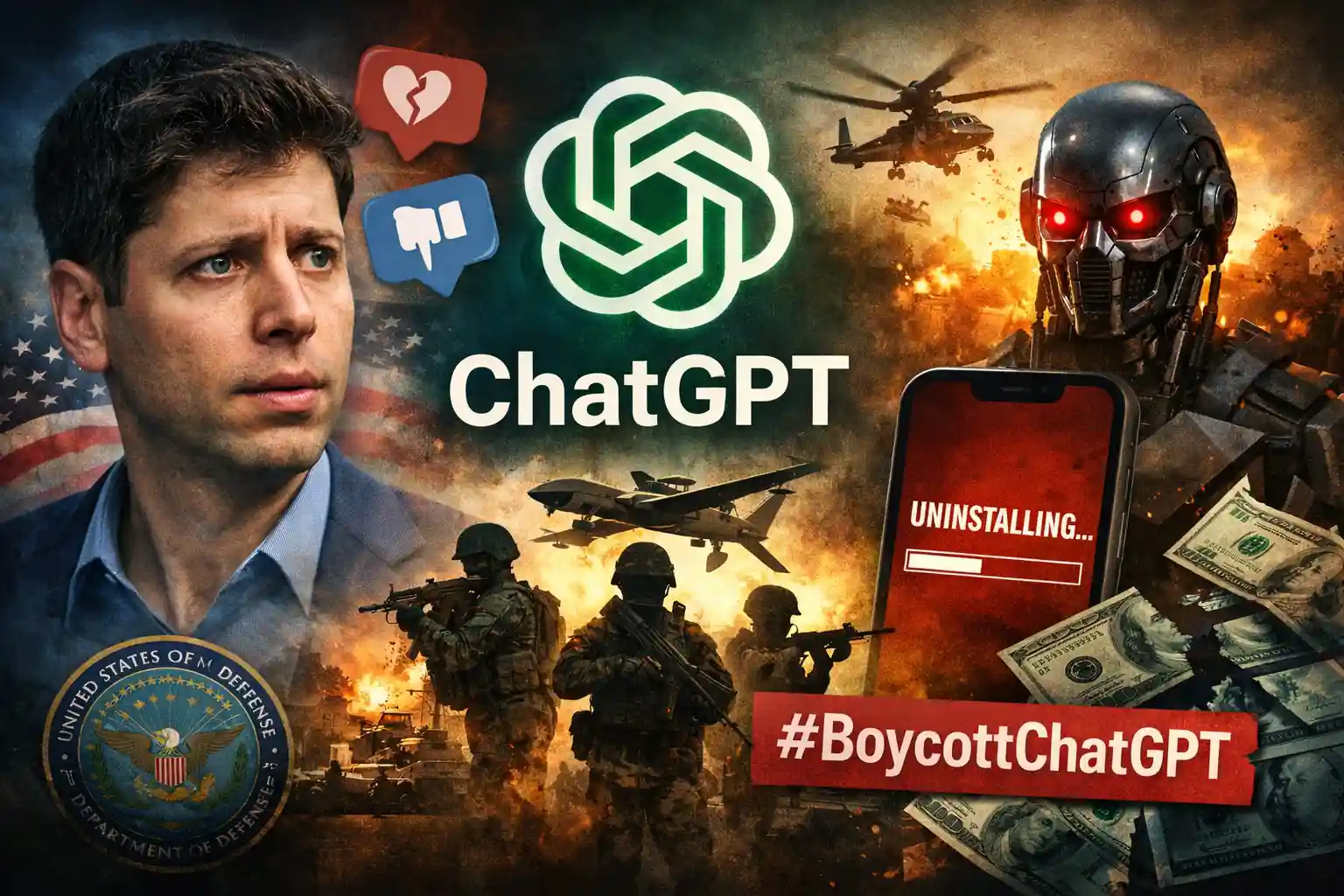
A fresh controversy has pushed OpenAI and its CEO, Sam Altman, into the spotlight again. Thousands of users have started cancelling ChatGPT subscriptions after reports surfaced that OpenAI signed a deal with the U.S. Department of Defense. The agreement raised concerns that artificial intelligence tools may support military operations.
The reaction has been swift. Online campaigns calling for a boycott of ChatGPT have spread across social media platforms. At the same time, rival AI tools have seen a sudden increase in users. The situation has forced OpenAI leadership to respond quickly and explain the company’s position.
Why the Backlash Started
The controversy began after news broke that OpenAI secured a contract with the Pentagon. The agreement allows the U.S. military to use OpenAI technology within its systems. Critics fear that such technology could help build surveillance tools or autonomous weapons.
Many AI researchers and users worry about the ethical impact of using generative AI in military environments. The debate became sharper when another AI company, Anthropic, refused a similar government deal over concerns related to surveillance and weapons systems.
This contrast pushed the issue into public debate. Some users concluded that OpenAI crossed a line that other companies refused to cross.
Mass Cancellations and App Uninstalls
Reports show that the backlash quickly turned into action. Users began uninstalling ChatGPT and cancelling paid subscriptions in large numbers. Some critics accused OpenAI of helping build what they called a “war machine.”
At the same time, competitors benefited from the situation. Alternative AI platforms saw a surge in downloads as users searched for tools that align better with their values.
Industry observers note that trust plays a central role in AI adoption. When users believe that a technology may support harmful activities, they often respond by abandoning the platform.
Internal Pressure at OpenAI
The controversy has also affected OpenAI internally. Some employees and AI researchers have expressed concern about military partnerships and the broader direction of AI development.
In one high-profile case, a senior robotics leader at the company resigned, citing ethical concerns about the Pentagon agreement. The employee explained that issues such as surveillance and autonomous weapons require deeper discussion and stronger safeguards.
Employee activism is not new in the technology industry. Workers at large tech firms have previously protested projects linked to military contracts or surveillance systems.
Sam Altman’s Response
Sam Altman has acknowledged that the situation created negative public perception. He admitted that the deal appeared rushed and that the optics “didn’t look good.”
OpenAI has attempted to reassure users by stating that the agreement includes restrictions. According to the company, its technology cannot be used for domestic surveillance or autonomous weapons.
However, critics argue that once technology enters military systems, companies lose control over how it is used in the future.
A Bigger Debate About AI and War
This controversy reflects a larger global question: should advanced AI tools support military operations?
Supporters of such partnerships argue that governments need advanced technology to protect national security. They also claim that democratic nations must stay ahead in AI development.
Opponents take a different view. They fear that AI could accelerate automated warfare, increase surveillance, and reduce human oversight in critical decisions.
The debate is far from over. As AI systems grow more powerful, pressure on technology companies will increase. Every new contract, partnership, or deployment may trigger another public debate about how far AI should go.
What This Means for the AI Industry
The current backlash offers a clear lesson for the AI sector. Technical innovation alone does not guarantee user trust. Ethical decisions, transparency, and public communication also shape how people view new technology.
Companies that develop powerful AI tools now operate under intense scrutiny. Governments want access to these tools. At the same time, users expect responsible and ethical use.
Balancing these expectations may become one of the biggest leadership challenges for the AI industry in the years ahead.