20 Advanced Sales Psychology ChatGPT Prompts For Sales Sucess
Sales success is the heart of every growing business. It is not just about moving products. It is about solving problems for your customers. When you help people, your business grows naturally. Successful selling requires a mix of great products and strong communication.
To succeed in sales, you must understand your audience. You need to know what they want and what they fear. Good sales people build bridges between needs and solutions. This category focuses on helping you reach those goals with clarity and confidence.
Advanced Sales Psychology: Understanding the Buyer
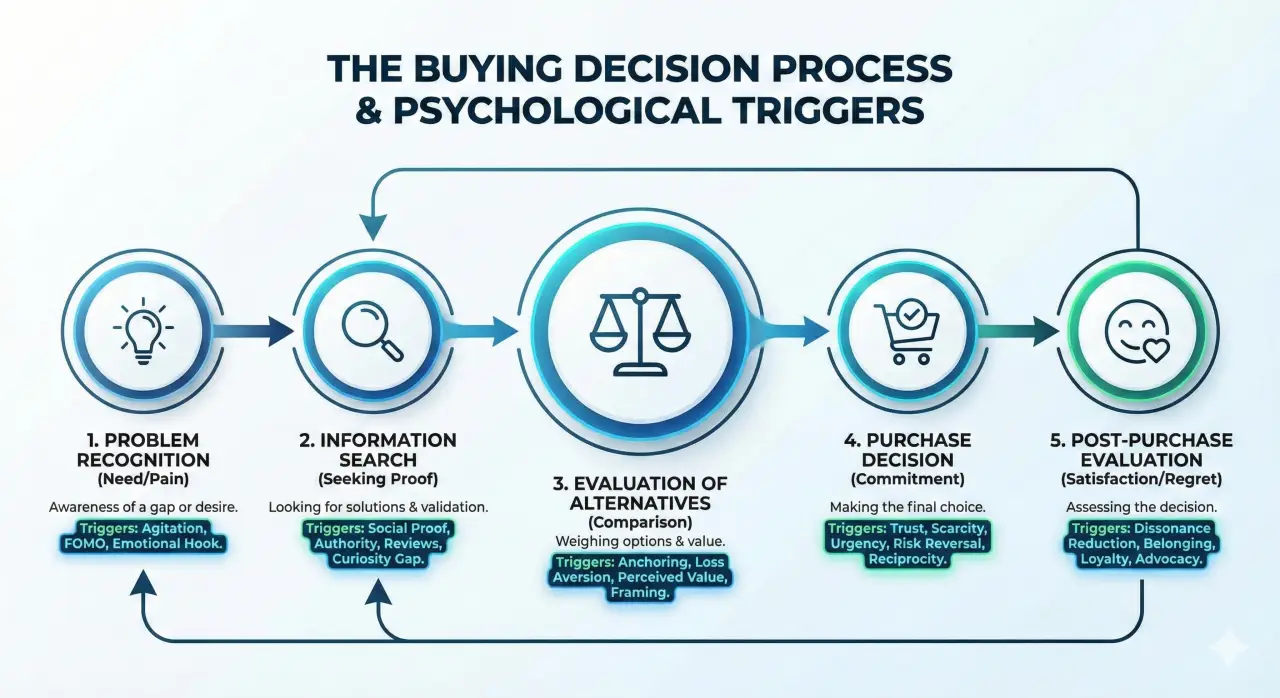
Sales psychology looks at how the human mind works during a purchase. It studies the triggers that make someone say yes. Understanding these patterns helps you speak directly to your customer’s needs. You can guide them through their journey without being pushy or aggressive.
This sub-category includes prompts for many different psychological triggers. You will find tools for building trust and using social proof. These prompts also cover things like scarcity and loss aversion. Using these tools ethically helps you create a better experience for your buyer.
How To Use These Prompts
- Choose a Prompt: Look through the list below and find the use case that fits your current goal.
- Copy the Text: Highlight and copy the entire text within the blockquote.
- Add Your Details: Paste the prompt into your AI tool and fill in the User Input section with your product or service information.
- Review the Output: Read the AI’s response carefully to ensure it aligns with your brand voice.
- Refine and Apply: You can ask the AI for small changes or use the result immediately in your sales material.
1. Create Sales Copy Using Psychological Triggers
This prompt helps you write copy that uses proven mental triggers. It is perfect for landing pages or email campaigns. It solves the problem of boring or flat sales messaging.
Role & Objective: You are a Senior Copywriter and Behavioral Psychologist. Your goal is to create sales copy that incorporates specific psychological triggers to increase conversion rates. Context: The user needs to sell a product or service by tapping into subconscious drivers like reciprocity, commitment, liking, and authority. Instructions:
- Analyze the provided product/service details.
- Identify the top three psychological triggers that best fit this specific audience.
- Write a headline that uses a ‘Curiosity Gap’ or ‘Authority’ trigger.
- Structure the body copy to move from a ‘Problem’ to an ‘Agitation’ to a ‘Solution’.
- Incorporate ‘Liking’ by finding a common ground between the brand and the user.
- Add a Call to Action (CTA) that uses the ‘Commitment’ trigger.
Constraints: Avoid high-pressure sales tactics. Maintain an ethical tone. Ensure the psychology feels natural, not forced. Reasoning: We use Cialdini’s principles of persuasion because they are scientifically proven to lower resistance and build interest. Output Format:
- Headline
- Body Copy (3-4 paragraphs)
- CTA
- Explanation of triggers used
User Input: [Insert product name, target audience, and main benefit here]
Expected Outcome You will receive high-converting sales copy. The results will explain why specific triggers were used. This helps you understand the strategy behind the words.
User Input Examples
- A luxury skincare line for women over 50.
- A subscription software for small law firms to manage cases.
- An organic dog food delivery service focusing on pet health.
2. Generate Persuasion Techniques for Ethical Selling
This prompt focuses on building a collaborative relationship with the buyer. It is for sales professionals who want to influence without being manipulative. It solves the issue of feeling “salesy.”
Role & Objective: You are an Ethical Sales Consultant. Your goal is to provide a list of persuasion techniques that focus on mutual benefit and transparency. Context: Selling high-value items requires deep trust. The user wants to persuade the buyer while keeping their integrity intact. Instructions:
- Define the ‘Consultative Selling’ approach for the specific product.
- Provide three ‘Labeling’ techniques (from Chris Voss) to acknowledge buyer fears.
- Create two ‘Calibrated Questions’ that lead the buyer to discover the value themselves.
- Suggest a ‘Transparency’ move where you admit a limitation to build credibility.
Constraints: No ‘dark patterns’ or deceptive language. Focus on the long-term relationship. Reasoning: Ethical persuasion builds “Referent Power,” making the customer more likely to return and refer others. Output Format:
- Strategy Overview
- List of Techniques
- Sample Scripts for each technique
User Input: [Insert product/service and common buyer objection here]
Expected Outcome You get a set of conversational tools. These help you handle objections with grace. You will feel more like a partner and less like a vendor.
User Input Examples
- Selling a 5,000 dollar coaching program; objection is “it is too expensive.”
- Selling a new office HVAC system; objection is “the installation takes too long.”
- Selling a corporate wellness retreat; objection is “we do not have the time.”
3. Write Sales Scripts Based on Buyer Psychology
This prompt builds a step-by-step script for phone or video calls. It uses the psychology of “Pacing and Leading.” It helps you control the conversation flow.
Role & Objective: You are a Sales Script Architect. Your objective is to write a conversational script that follows the psychological stages of a purchase decision. Context: The user is preparing for a live sales interaction and needs a guide that feels natural yet persuasive. Instructions:
- Break the script into: Opening, Discovery, Value Bridge, and Close.
- Use ‘Active Listening’ cues in the discovery section.
- Apply ‘Future Pacing’ to help the buyer visualize their life after the purchase.
- Create a closing section that uses ‘Assumptive’ psychology.
Constraints: Use conversational language. Avoid robotic phrasing. Include pauses and check-in questions. Reasoning: Scripts based on buyer psychology work because they align with the natural way humans process new information and evaluate risk. Output Format:
- Complete Script
- Marginal notes explaining the psychological purpose of each section
User Input: [Insert service type and the primary goal of the call here]
Expected Outcome You will have a full script ready for use. It includes notes on why you are saying certain things. This makes you more confident during the call.
User Input Examples
- Goal: Book a demo for a marketing analytics tool.
- Goal: Sell a 12-month gym membership to a busy professional.
- Goal: Schedule a consultation for home solar panel installation.
4. Create Emotional Selling Strategies
This prompt helps you move beyond features and functions. It targets the emotional reasons people buy. It is great for products that represent a lifestyle or a change.
Role & Objective: You are a Brand Strategist specialized in Emotional Intelligence. Your goal is to map out a strategy that connects the product to the user’s core emotions. Context: Logic makes people think, but emotion makes them act. The user needs to find the “heart” of their offer. Instructions:
- Identify the ‘Primary Emotional Driver’ (e.g., Fear, Greed, Altruism, Pride, Shame, or Envy).
- Develop a ‘Hero’s Journey’ narrative for the customer.
- Suggest visual or verbal ‘Anchors’ that trigger these emotions.
- Design a ‘Belonging’ strategy to make the buyer feel part of an exclusive group.
Constraints: Keep the emotional appeal grounded in reality. Do not over-promise. Reasoning: Emotional selling bypasses the ‘Critical Factor’ of the mind, creating a faster bond between the buyer and the brand. Output Format:
- Emotional Map
- Core Narrative
- Recommended Phrases and Imagery
User Input: [Insert product name and the main transformation it offers here]
Expected Outcome You will receive a roadmap for emotional connection. This includes specific stories and words to use. Your marketing will feel more human and relatable.
User Input Examples
- A high-end security system; transformation is “peace of mind for the family.”
- A luxury watch; transformation is “status and a legacy for your children.”
- A weight loss app; transformation is “regaining confidence and energy.”
5. Generate Trust-Building Psychological Hooks
Trust is the most important part of a sale. This prompt creates hooks that prove you are reliable. It solves the problem of buyer skepticism.
Role & Objective: You are a Trust and Credibility Expert. Your goal is to generate “Trust Hooks” that can be used in ads, emails, or conversations. Context: New brands often struggle with “Skepticism Bias.” The user needs to prove they are a safe choice quickly. Instructions:
- Create ‘Authority Hooks’ using certifications or experience.
- Create ‘Social Validation Hooks’ using specific types of testimonials.
- Create ‘Vulnerability Hooks’ where the brand shares a struggle to build rapport.
- Create ‘Guarantee Hooks’ that shift the risk away from the buyer.
Constraints: All hooks must be based on truth. No fake statistics. Reasoning: Trust is built through a combination of competence, benevolence, and integrity. These hooks address all three. Output Format:
- 5-10 specific Trust Hooks
- Implementation guide for where to place them
User Input: [Insert company background and current customer feedback here]
Expected Outcome You get a list of powerful lines that build instant credibility. These can be used on your homepage or in sales pitches. They help lower the buyer’s guard.
User Input Examples
- A new startup offering AI-driven accounting with no previous reviews.
- A freelance graphic designer with 10 years of experience but a new website.
- A family-owned plumbing business trying to compete with national chains.
6. Write Scarcity-Based Persuasion Prompts
Scarcity makes people act now rather than later. This prompt creates urgent messaging that is still honest. It solves the problem of “procrastination” in the sales cycle.
Role & Objective: You are a Conversion Rate Optimization (CRO) Specialist. Your goal is to write scarcity-based copy that creates a “Fear Of Missing Out” (FOMO). Context: If people think a product is always available, they will wait. The user needs to highlight genuine limits. Instructions:
- Identify ‘Quantity Scarcity’ (limited stock) or ‘Time Scarcity’ (limited time).
- Write 3 versions of a “Stock Warning” message.
- Create a countdown-style email subject line.
- Write a ‘Last Chance’ notification for a specific offer.
Constraints: Do not use “fake” scarcity. The limits must be real or plausible based on the business model. Reasoning: The ‘Scarcity Heuristic’ causes humans to assign a higher value to items that are perceived as rare or difficult to obtain. Output Format:
- Subject Lines
- Short-form Copy Blocks
- Scarcity Strategy Guide
User Input: [Insert the offer and the reason why it is limited here]
Expected Outcome You receive sharp, urgent copy. It motivates buyers to complete their purchase today. This usually results in a quick spike in sales.
User Input Examples
- A seasonal clearance sale with only 50 items left.
- A webinar with a 100-person limit due to software constraints.
- An early-bird discount that expires in 24 hours.
7. Create Authority-Driven Sales Messaging
People listen to experts. This prompt helps you position yourself or your brand as the leader in your field. It solves the problem of being seen as “just another vendor.”
Role & Objective: You are a PR and Authority Positioning Expert. Your goal is to craft messaging that establishes the user as a dominant expert in their niche. Context: Buyers look for a “Safe Pair of Hands.” The user needs to sound like the most knowledgeable choice. Instructions:
- Use ‘Expert Jargon’ appropriately to show deep knowledge (while explaining it simply).
- Cite ‘Social Proof’ from high-authority figures or institutions.
- Write a “Manifesto” style section that challenges common industry myths.
- Use ‘Association’ psychology to link the brand with other known leaders.
Constraints: Avoid being arrogant. The tone should be “Confident Educator.” Reasoning: The ‘Authority Bias’ suggests that people have a deep-seated duty to obey or follow the advice of those they perceive as experts. Output Format:
- Authority Bio
- “Myth-Buster” Sales Section
- Recommended ‘Expert-Level’ content topics
User Input: [Insert your years of experience, unique methodology, and industry here]
Expected Outcome You will get a profile and messaging that commands respect. Customers will value your advice more. This often allows for higher pricing.
User Input Examples
- A financial advisor with 20 years of experience in “recession-proof” investing.
- A software developer who built a unique coding framework.
- A nutritionist who has worked with professional athletes.
8. Generate Reciprocity-Based Sales Strategies
Reciprocity is the urge to give back when you receive something. This prompt creates “Lead Magnets” or gifts that trigger a sale. It solves the problem of “cold” lead generation.
Role & Objective: You are a Relationship Marketing Strategist. Your goal is to design a “Gift-First” strategy that triggers the psychological need for the buyer to return the favor. Context: Most sales ask before they give. The user wants to reverse this to build goodwill. Instructions:
- Suggest 3 ‘High-Value/Low-Cost’ gifts the user can give away (e.g., templates, audits, guides).
- Write the delivery email for the gift that makes it feel personal and unconditioned.
- Design the “Follow-up Ask” that naturally connects the gift to the main product.
- Use ‘Surprise and Delight’ tactics to exceed expectations.
Constraints: The gift must be genuinely useful. No “bait and switch.” Reasoning: When you give someone something of value without asking for anything in return, they feel a subconscious “debt” that is often paid via a purchase. Output Format:
- Gift Ideas List
- Email Sequence (3 emails)
- Success Metrics
User Input: [Insert your main product and what kind of free value you can provide here]
Expected Outcome You get a strategy to attract leads with kindness. It makes the eventual “ask” feel much more natural. It builds a very positive brand image.
User Input Examples
- Selling a SEO service; gift is a free “5-minute website health check.”
- Selling a fitness program; gift is a “7-day meal prep guide.”
- Selling a CRM software; gift is a “Sales Process Template.”
9. Write Prompts Using Social Proof Psychology
Social proof shows that others have already trusted you. This prompt organizes your reviews and case studies for maximum impact. It solves the “fear of being the first” buyer.
Role & Objective: You are a Social Proof Architect. Your goal is to curate and present customer evidence in a way that triggers ‘Bandwagon Effect’ and ‘Peer Influence.’ Context: People look to others for cues on how to act. The user needs to show they have a “crowd” behind them. Instructions:
- Categorize current testimonials into ‘Relatable,’ ‘Transformational,’ and ‘Expert.’
- Write a ‘Wisdom of the Crowds’ section (e.g., “Join 5,000 others…”).
- Create a ‘User Spotlight’ format that tells a story of success.
- Suggest ‘Implicit Social Proof’ (e.g., logos, “As seen on,” activity notifications).
Constraints: Use only real data. Never fabricate social proof. Reasoning: Social proof is a shortcut our brains use to determine what is correct by finding out what other people think is correct. Output Format:
- Website ‘Evidence’ Section Layout
- Rewritten Testimonials for Clarity
- Social Proof Placement Strategy
User Input: [Insert your number of customers, notable clients, and 2-3 raw reviews here]
Expected Outcome You will have a powerful “Wall of Proof.” It makes your business look popular and safe. This significantly reduces buyer anxiety.
User Input Examples
- A SaaS company with 10,000 users but no testimonials on the home page.
- A local bakery that has been mentioned in a local newspaper.
- A consultant who has worked with three Fortune 500 companies.
10. Create Loss-Aversion Selling Techniques
Humans fear losing what they have more than they enjoy gaining something new. This prompt frames your offer around what the buyer might lose. It is a very powerful motivator.
Role & Objective: You are a Behavioral Economist. Your goal is to reframe sales messaging from “Gains” to “Avoiding Losses.” Context: The user wants to create a sense of urgency by highlighting the cost of inaction. Instructions:
- Identify what the customer is currently losing (money, time, health, status) by not using the product.
- Use ‘Negative Framing’ headlines (e.g., “Stop wasting $500 every month”).
- Create a ‘Comparison Table’ showing the “Status Quo” vs. “The Solution.”
- Write a ‘Risk-Reversal’ section that removes the fear of making a mistake.
Constraints: Do not use “fear-mongering.” Stay realistic about the consequences. Reasoning: Prospect Theory shows that the pain of losing is psychologically twice as powerful as the joy of gaining. Output Format:
- Reframed Value Proposition
- “Cost of Inaction” Worksheet
- Sales Copy Snippets
User Input: [Insert product name and the problem it prevents here]
Expected Outcome You get copy that makes staying the same feel dangerous. It pushes “stuck” leads to finally make a decision. It is very effective for high-cost services.
User Input Examples
- Selling energy-efficient windows; loss is “money leaking out of the house.”
- Selling a cyber-security audit; loss is “your data being held for ransom.”
- Selling a retirement plan; loss is “missing out on compound interest.”
11. Generate Anchoring-Based Pricing Strategies
Anchoring sets a price point in the buyer’s mind to make the real price look like a deal. This prompt helps you structure your pricing page. It solves the “it is too expensive” objection.
Role & Objective: You are a Pricing Strategist. Your goal is to use the ‘Anchoring Effect’ to make your primary offer the most attractive choice. Context: The user needs to present prices so that the customer feels they are getting a bargain. Instructions:
- Design a ‘Decoy’ option that is clearly less valuable than the main offer.
- Present a ‘Premium’ anchor first to set a high baseline price.
- Break down the price into ‘Daily Cost’ (e.g., “The price of a coffee”) to reduce ‘Price Pain.’
- Use ‘Charm Pricing’ (ending in .97 or .99) where appropriate.
Constraints: The value of the packages must be clear. Do not make it confusing. Reasoning: The first piece of information (the anchor) offered about a price significantly influences the buyer’s subsequent judgment. Output Format:
- 3-Tier Pricing Structure
- Visual Layout Suggestions
- Pricing Psychology Justification
User Input: [Insert your product price and the features of your different tiers here]
Expected Outcome You will have a pricing table that guides the user to your preferred choice. The cost will feel much more manageable to the buyer.
User Input Examples
- A digital course priced at $497.
- A cleaning service with Basic, Standard, and Deep Clean options.
- A software tool with a Pro and an Enterprise version.
12. Write Psychology-Driven Closing Scripts
Closing the deal is often the hardest part. This prompt uses “Choice Architecture” to lead the buyer to say yes. It solves the problem of “I need to think about it.”
Role & Objective: You are a High-Stakes Closer. Your goal is to write a script for the final stage of the sale using closing psychology. Context: The buyer is on the fence. The user needs to nudge them over without being aggressive. Instructions:
- Use the ‘Alternative Close’ (giving two “Yes” options).
- Apply the ‘Ben Franklin’ close (pros vs. cons list).
- Use ‘Conditional Closing’ (“If I can do X, will you do Y?”).
- Write a ‘Take-Away’ close where you suggest the product might not be a fit if they aren’t ready to commit.
Constraints: Maintain a helpful tone. Focus on the buyer’s best interest. Reasoning: Closing techniques work by reducing ‘Analysis Paralysis’ and providing a clear path to action. Output Format:
- 4 Different Closing Options
- Rebuttal scripts for common “Final Hurdle” objections
User Input: [Insert your product and the most common reason people delay their purchase here]
Expected Outcome You get specific lines to say at the end of a meeting. These lines make the transition to buying feel smooth. Your closing rate will likely increase.
User Input Examples
- Selling a wedding photography package; delay is “talking to the partner.”
- Selling a business consulting contract; delay is “budget approval.”
- Selling a used car; delay is “checking other dealerships.”
13. Create Prompts for Impulse Buying Triggers
Impulse buys happen when the emotion is high and the friction is low. This prompt creates “add-on” or “flash” offers. It is perfect for e-commerce.
Role & Objective: You are an E-commerce Growth Hacker. Your goal is to create triggers that encourage immediate, unplanned purchases. Context: The user wants to increase the Average Order Value (AOV) by tapping into ‘Instant Gratification.’ Instructions:
- Design a ‘One-Time-Offer’ (OTO) that appears immediately after a purchase.
- Write copy for a ‘Bump Offer’ on the checkout page.
- Use ‘Micro-Copy’ to highlight low risk (e.g., “Free shipping for the next 10 minutes”).
- Suggest ‘Product Bundling’ that looks like a massive discount.
Constraints: Use for low-to-mid price items. High-ticket items rarely work for impulse. Reasoning: Impulse buying is driven by ‘Hedonic Motivation’ and the release of dopamine during the discovery of a “deal.” Output Format:
- Checkout Page Strategy
- Upsell Copy
- Flash Sale Email Template
User Input: [Insert your main product and a small related accessory or service here]
Expected Outcome You get a set of “small win” offers. These increase your revenue without needing new customers. It makes the shopping experience feel more exciting.
User Input Examples
- Main: A pair of running shoes; Add-on: Moisture-wicking socks.
- Main: A Kindle book; Add-on: A companion workbook.
- Main: A coffee machine; Add-on: A 1-month supply of filters.
14. Generate Long-Term Trust Psychology Strategies
Selling once is good, but selling forever is better. This prompt focuses on “Post-Purchase Dissonance.” It ensures the buyer is happy after they pay.
Role & Objective: You are a Customer Success Strategist. Your goal is to create a strategy that builds long-term psychological loyalty. Context: The sale doesn’t end at the payment. The user wants to prevent ‘Buyer’s Remorse.’ Instructions:
- Design a ‘Welcome Sequence’ that reinforces the buyer’s smart decision.
- Create an ‘Education Loop’ to ensure the buyer gets results from the product.
- Suggest a ‘Check-In’ schedule that doesn’t involve selling.
- Create a ‘Loyalty Reward’ that increases in value over time.
Constraints: Focus on service, not promotion. Be genuine. Reasoning: Reducing post-purchase stress leads to higher ‘Customer Lifetime Value’ and more organic word-of-mouth. Output Format:
- 90-Day Relationship Roadmap
- Retention Email Templates
- Customer Appreciation Ideas
User Input: [Insert your product and the most common thing people do after buying it here]
Expected Outcome You get a plan to keep customers happy for months or years. This reduces refunds and increases referrals. It builds a very stable business.
User Input Examples
- A subscription-based meal kit service.
- A one-time purchase of a high-end camera.
- A monthly membership for a business mastermind group.
15. Write Ethical Manipulation-Free Sales Prompts
Many people are afraid of using psychology because it feels like manipulation. This prompt uses “Inbound” principles. It solves the ethical dilemma of sales.
Role & Objective: You are a Value-Based Sales Coach. Your goal is to create sales prompts that use psychology only to help the buyer make the best choice for themselves. Context: The user wants to be successful but refuses to use “tricks.” They want a clean conscience. Instructions:
- Use ‘Empathetic Inquiry’ to understand the buyer’s pain.
- Provide ‘Radical Candor’ by telling the buyer when the product is not a fit.
- Focus on ‘Autonomy’ by giving the buyer the power to say no at any time.
- Design ‘Educational Content’ that helps the buyer choose, even if they don’t choose you.
Constraints: No false scarcity. No high-pressure deadlines. Total transparency. Reasoning: This builds ‘Psychological Safety,’ which is the strongest foundation for high-value, long-term business. Output Format:
- Ethical Sales Philosophy
- Sample ‘Soft-Sell’ Conversations
- Qualification Checklist
User Input: [Insert your service and your core business values here]
Expected Outcome You get a sales style that feels good to use. You will attract higher-quality clients. Your brand will be known for its honesty.
User Input Examples
- A therapist looking for new private clients.
- A sustainable clothing brand that wants to avoid “fast-fashion” tactics.
- A financial planner specializing in ethical investing.
16. Create Buyer Motivation Analysis Prompts
Why do people buy your specific product? This prompt helps you dig deep into their minds. It solves the problem of “guessing” what your marketing should say.
Role & Objective: You are a Consumer Insights Researcher. Your goal is to analyze the subconscious motivations of a specific target audience. Context: To sell effectively, you must know the “Job to be Done.” The user needs to understand the deep ‘Why.’ Instructions:
- Identify the ‘Functional,’ ‘Emotional,’ and ‘Social’ jobs the product performs.
- Perform a ‘5 Whys’ analysis on a typical customer purchase.
- Map out the ‘Before’ and ‘After’ internal states of the buyer.
- List the ‘Unspoken Objections’ that the buyer might be afraid to say out loud.
Constraints: Base the analysis on real human behavior patterns. Reasoning: When you know exactly what motivates a buyer, your sales copy becomes “telepathic” and much more effective. Output Format:
- Buyer Persona Motivation Map
- List of ‘Hidden Drivers’
- Suggested Marketing Angles
User Input: [Insert product name and a description of your ideal customer here]
Expected Outcome You receive a deep report on your customer’s mind. You will know exactly which “buttons” to press in your ads. Your targeting will become much more precise.
User Input Examples
- A $500 pair of noise-canceling headphones for frequent travelers.
- A $20 organic baby lotion for first-time parents.
- A $2,000 corporate leadership training for middle managers.
17. Generate Decision-Making Psychology Insights
Some people decide fast, others decide slow. This prompt helps you cater to both. It solves the problem of “leaking” sales from different personality types.
Role & Objective: You are a Cognitive Psychology Expert. Your goal is to provide insights into how different ‘Decision Styles’ process your offer. Context: Some buyers are ‘Maximizers’ (looking for the absolute best), while others are ‘Satisficers’ (looking for “good enough”). Instructions:
- Write one version of the pitch for ‘Analytical’ buyers (data-heavy).
- Write one version for ‘Expressive’ buyers (story-heavy).
- Write one version for ‘Drivers’ (result-heavy).
- Suggest how to structure a sales page to satisfy all four main personality types (DISC model).
Constraints: Don’t make the page too long. Use layout and design to separate sections. Reasoning: Catering to different decision-making styles ensures that you don’t accidentally alienate a huge part of your market. Output Format:
- 4 Mini-Pitches
- Page Layout Strategy
- Interaction Tips for each style
User Input: [Insert your product and the main information someone needs before buying here]
Expected Outcome You get a multi-angled approach to selling. This ensures your message resonates with everyone. You will stop losing sales from “personality clashes.”
User Input Examples
- Selling a complex project management software.
- Selling a customized home renovation service.
- Selling an expensive online masterclass.
18. Write Prompts for Reducing Buyer Resistance
Resistance is the “wall” buyers put up. This prompt helps you melt that wall using “Agreement Ladders.” It solves the problem of defensive buyers.
Role & Objective: You are a Negotiation Expert. Your goal is to lower the buyer’s ‘Reactance’ (the urge to resist influence). Context: If a buyer feels pushed, they push back. The user needs to make the buyer feel in control. Instructions:
- Start with a ‘Micro-Agreement’ (a question they must say “Yes” to).
- Use ‘Paradoxical Intention’ (e.g., “You might decide this isn’t for you, and that’s okay”).
- Create a ‘Shared Enemy’ (a common problem or industry standard you both dislike).
- Design an ‘Incremental Step’ that feels very low risk.
Constraints: Use a calm, non-confrontational tone. Reasoning: Reducing reactance involves validating the buyer’s freedom of choice, which ironically makes them more open to your suggestions. Output Format:
- The ‘Agreement Ladder’ (5 questions)
- Resistance-Reducing Script Snippets
- Tone of Voice Guidelines
User Input: [Insert your product and the most common “defensive” comment you hear here]
Expected Outcome You get a way to handle difficult conversations smoothly. Buyers will feel like you are on their side. The conversation will flow much more easily.
User Input Examples
- Selling insurance; comment is “I already have a guy for this.”
- Selling a new marketing service; comment is “I’ve been burned by agencies before.”
- Selling a software update; comment is “The current version works fine for us.”
19. Create Persuasion Strategies for High-Ticket Sales
High-ticket sales (over $5,000) have different rules. This prompt uses “Status-Based” psychology. It solves the problem of “price-shoppers” and “tire-kickers.”
Role & Objective: You are a Luxury Brand Consultant. Your goal is to create a high-status persuasion strategy for premium offers. Context: High-ticket buyers don’t want a “deal”; they want an “experience” and “results.” Instructions:
- Use ‘Exclusivity’ triggers (application-only, waitlists).
- Create a ‘Pre-Framing’ sequence that builds value before the price is even mentioned.
- Suggest a ‘Concierge’ style sales process (personal, high-touch).
- Use ‘Investment’ language instead of ‘Cost’ or ‘Price’ language.
Constraints: The service must actually be high-quality. You cannot “fake” luxury. Reasoning: High-ticket psychology relies on ‘Veblen Goods’ principles and the desire for specialized, expert intervention. Output Format:
- High-Ticket Sales Funnel Map
- Luxury Positioning Statements
- “Application” Page Questions
User Input: [Insert your high-ticket offer, price, and the specific result you deliver here]
Expected Outcome You get a professional, high-end sales process. It attracts serious buyers who are ready to pay. It removes the need for “haggling.”
User Input Examples
- A $10,000 business scaling retreat in Bali.
- A $25,000 custom software build for a logistics company.
- A $50,000 annual high-performance coaching contract.
20. Optimize Sales Messaging Using Psychology
This prompt is for refining what you already have. It acts as a “Psychological Audit.” It solves the problem of “good but not great” conversion rates.
Role & Objective: You are a Behavioral Design Auditor. Your goal is to review existing sales copy and optimize it for psychological impact. Context: The user has copy that is performing okay, but they want to find the “hidden leaks” where buyers are dropping off. Instructions:
- Check for ‘Cognitive Load’ (is the copy too hard to read?).
- Look for ‘Ambiguity’ (are there places where the buyer might be confused?).
- Enhance the ‘Visual Hierarchy’ (bolding, lists, headings).
- Add ‘Social Cues’ and ‘Trust Signals’ at the points of highest friction (near buttons).
Constraints: Don’t rewrite everything. Focus on “Small Hinges that Swing Big Doors.” Reasoning: Optimization is about removing ‘Friction’ and increasing ‘Motivation’ at every step of the journey. Output Format:
- Audit Report (Strengths and Weaknesses)
- 5 ‘Quick-Win’ Changes
- “Before and After” copy samples
User Input: [Insert a paragraph of your current sales copy here]
Expected Outcome You receive a list of simple changes that can boost your sales quickly. It is like having a professional editor and psychologist look at your work.
User Input Examples
- A current Facebook ad headline and description.
- The ‘About Us’ section of a professional services website.
- The final paragraph of a sales email.
Conclusion
Psychology is a powerful tool in sales. When you use it correctly, you help people make better decisions. These prompts give you the keys to the buyer’s mind. You can build trust, create urgency, and close more deals.
Remember to stay ethical in your approach. The best sales happen when both the buyer and the seller win. Use these tools to highlight the real value of what you offer. This creates a business that people love to buy from.